
Your home battery can do more than store electricity for an outage. If you’re a PECO residential electric customer, it may also earn rewards for helping the grid when electricity demand is high.
PECO’s Flex & Save program pays eligible customers for allowing their batteries to discharge stored energy during designated events. PECO advertises average annual rewards of approximately $480, although your actual payment depends on your battery’s performance and the program’s requirements.
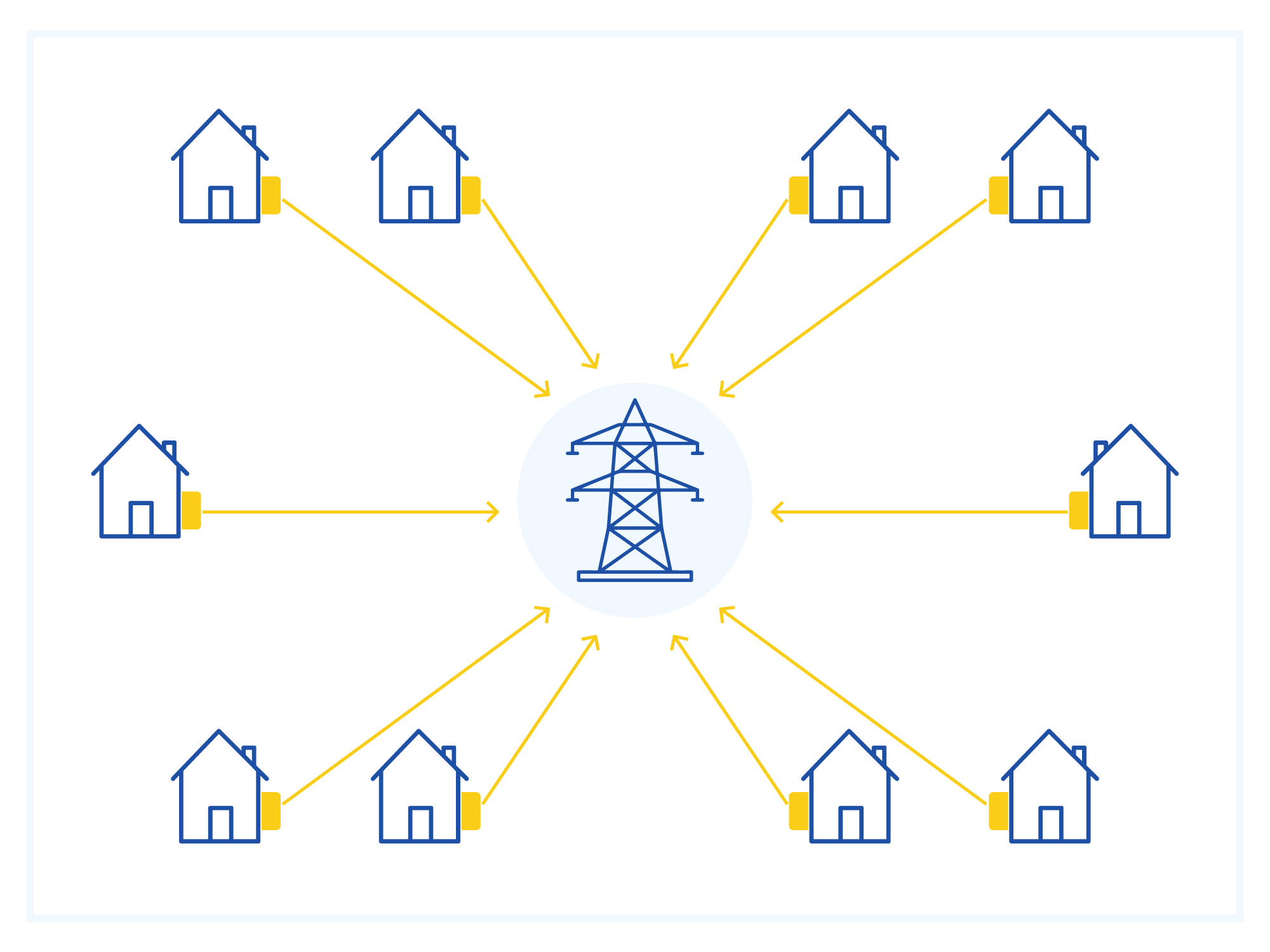
Together, participating batteries form a virtual power plant, or VPP: a network of connected energy resources that can respond when the grid needs support.
For homeowners in Greater Philadelphia and surrounding communities served by PECO, this creates another reason to consider battery storage, or take a closer look at a battery they already own.
Already have a home battery? Visit PECO’s Flex & Save enrollment page to review your options.
Considering a battery for your home? Schedule a free consultation with Exact Solar. We’ll help you understand the equipment, backup capabilities, and potential financial benefits.
Table of Contents
How PECO’s Flex & Save Battery Program Works
Flex & Save rewards homeowners for making stored energy available during periods of high electricity demand.
When many homes need electricity at the same time, a coordinated group of batteries can help reduce pressure on the grid. Your battery contributes alongside other participating systems, and your reward reflects its average contribution during the season’s events.
Here’s what that means for your home.
Participation Is Organized Into Summer and Winter Seasons
The program has two reward seasons:
- Summer: June 1 through August 31.
- Winter: January 1 through February 28, or February 29 in a leap year.
These are the seasonal windows described for battery events and rewards. However, the program’s terms also authorize system testing, so homeowners should not assume that no program-related adjustments can occur outside those windows.
Your battery can continue serving its normal household functions throughout the year, depending on its configuration.
Your Battery Responds Automatically
During an event, a signal sent through your battery manufacturer’s platform adjusts the system’s operation so it can contribute stored energy.
You don’t need to manually turn the battery on for each event. Before enrolling, though, it’s worth understanding how your particular system handles participation, app notifications, and reserve settings.
The amount your battery contributes depends on more than its advertised size. Available charge, equipment configuration, household energy needs, and event conditions all matter.
Backup Settings Deserve Attention
If you purchased a battery for backup power, keeping energy available for an outage is probably a priority.
The program FAQ recommends a 20% reserve, while allowing homeowners to choose a reserve appropriate for their needs. That percentage is a starting point, not a promise of adequate backup for every household.
A refrigerator and a few lights require much less stored energy than electric heating or several large appliances. Discuss your priorities with your installer before deciding how much energy to make available.
Participating in an event uses stored energy. The amount remaining afterward affects how long your battery could support your home if an outage follows.
You Can Opt Out of Events
You can opt out of a current or future event through your manufacturer’s app or applicable device controls.
Review those controls before your first event so you know how to use them when needed. Notification features can vary by manufacturer.
Opting out may affect your seasonal reward because payments depend on performance across event hours.
How Much Can You Earn With PECO Flex & Save?
The program pays $80 per kilowatt of average contribution across all event hours in a season.
That wording matters. The reward is based on average power contribution, measured in kilowatts, or kW. It is not $80 for every kilowatt-hour of electricity discharged, and it is not a separate $80 payment for every event.
The calculation is:
Average qualifying contribution during the season × $80 per kW = seasonal reward
PECO illustrates the calculation with this example:
| Season | Average contribution during event hours | Illustrative reward |
|---|---|---|
| Summer | 2 kW | $160 |
| Winter | 4 kW | $320 |
| Annual total | Contributions from both seasons | $480 |
A battery averaging 4 kW in each season would produce a different illustrative result:
$320 in summer + $320 in winter = $640 annually.
That is a calculation example, not a guaranteed payment or an established program maximum.
A battery’s rated output also does not automatically equal its average contribution. For example, owning a system rated at 10 kW does not mean you will receive a reward based on 10 kW throughout every event.
When Will You Receive Your Payment?
The program provides a paper check rather than a bill credit, with checks mailed within six weeks after each season ends.
Eligible participation in both seasons can therefore result in two annual payments.
Review the enrollment requirements carefully, including the requirement to remain enrolled through the applicable season to qualify for its reward.
Consider the Costs Alongside the Reward
Your reward is one part of the financial picture.
After your battery discharges, it needs to recharge. Depending on your setup and conditions, that electricity may come from your solar panels or the grid. Battery charging and discharging also involve energy losses.
A useful comparison considers the expected reward alongside recharge costs, battery usage, and any electricity-rate benefits you would give up to participate.
Who Qualifies for PECO Flex & Save?
To participate, you need to meet the program’s customer, equipment, and connection requirements.
The main requirements include:
- Being at least 18 years old.
- Having an active PECO residential electric account.
- Having an eligible, operational battery system.
- Maintaining the required manufacturer account and connection in good standing.
- Having approval through PECO’s Green Power Connect process.
- Keeping your battery connected to the internet.
- Not participating in PECO’s Time-of-Use rate.
Meeting these requirements allows you to apply; participation still requires acceptance into the program.
Compare Flex & Save With Your Time-of-Use Savings
PECO does not allow simultaneous participation in Flex & Save and its Time-of-Use rate.
If you currently use Time-of-Use pricing, leaving that rate can take up to three billing periods. Confirm that the change is complete before applying.
Before switching, compare your existing savings with a realistic estimate of battery rewards. The better option depends on when your household uses electricity and how your battery operates.
Exact Solar can help you work through that comparison during a free consultation.
Check Your Battery and Inverter Compatibility
The program FAQ currently identifies these equipment combinations:
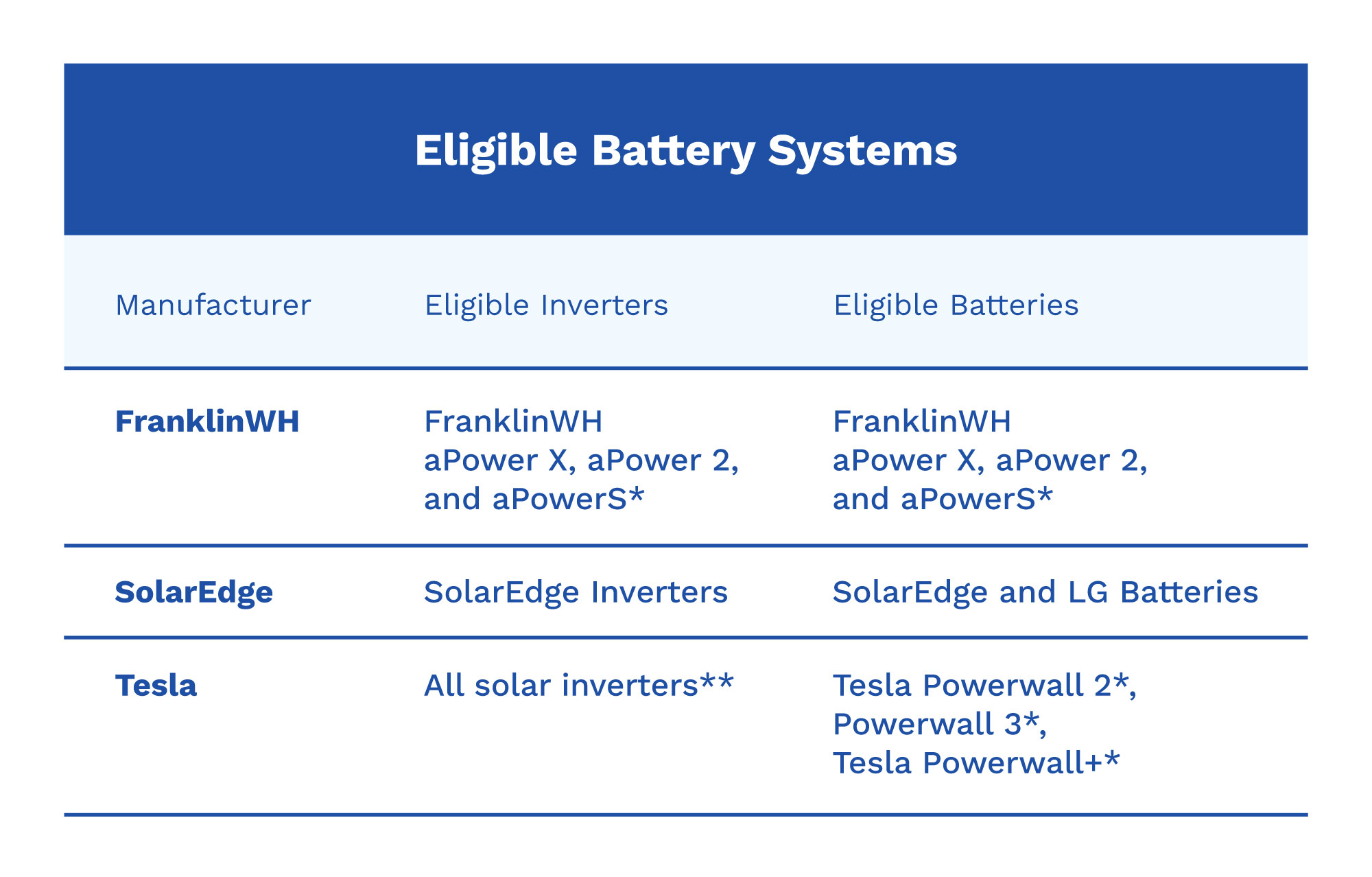
Enphase owners should also check their options: The enrollment page includes Enphase, although the FAQ’s equipment table does not currently list it. Confirm your specific model and eligibility through the program before relying on participation.
Compatibility involves the complete system, not just the battery brand. Your inverter, configuration, and utility approval also matter.
Confirm Your Interconnection Approval
An interconnection agreement establishes how your system can operate alongside PECO’s grid.
Your battery needs the applicable approval through PECO’s Green Power Connect team. An existing solar approval does not necessarily cover every later equipment addition or configuration change.
If you’re adding storage to an existing solar installation, have your installer confirm the required paperwork before you apply.
Maintain a Reliable Internet Connection
The program needs to communicate with your battery and measure its performance.
Connection problems can prevent participation in events and affect rewards. If your system repeatedly goes offline, address that issue with your installer or manufacturer before relying on projected earnings.
Read the Flex & Save terms and conditions for the complete requirements.
Why PECO Created a Home Battery Rewards Program
Electricity demand changes throughout the day and across the seasons.
During a hot summer afternoon, many households may run air conditioning at once. Cold weather can also increase demand, especially where homes rely on electric heating.
The electricity system must be prepared for those peaks, even when demand is much lower during other hours.
One way to meet peak demand is with additional generation, including power plants designed to operate when needed. Another is to reduce the amount of electricity customers need from the grid at those times.
Coordinated batteries can help with that second approach.
By drawing on stored energy across many locations, a virtual power plant can reduce peak demand and help make better use of existing resources. At sufficient scale, these programs can reduce the need for some additional generation and infrastructure investments.
That does not mean every battery directly replaces a power plant. It means distributed storage can contribute to a broader approach to grid reliability.
Flex & Save also supports PECO’s obligations under Pennsylvania’s Act 129, which requires covered utilities to offer programs addressing electricity consumption and demand.
For participating homeowners, the benefit is straightforward: a battery already serving their home may also earn compensation for supporting the grid.
What Is a Virtual Power Plant?
A virtual power plant coordinates many separate energy devices so they can respond together.
Those devices can include home batteries, solar systems, electric vehicle charging equipment, and appliances or controls that adjust electricity use.
A battery-focused VPP makes stored electricity available when needed. Other programs may temporarily reduce demand by adjusting participating equipment.
The word “virtual” describes the coordination. The equipment and electricity are real; they are simply spread across many properties instead of concentrated at one power station.
For Flex & Save, participating home batteries are the resources being coordinated.
Virtual Power Plants Extend Beyond Home Batteries
Home batteries are part of a larger category of distributed energy resources.
Earlier U.S. Department of Energy analysis estimated 30–60 gigawatts of existing VPP capacity and identified an opportunity to expand that to 80–160 gigawatts by 2030.
Those figures describe a broad category that includes demand-response resources. They should not be read as a count of residential solar batteries or a guarantee that deployment will reach a particular level.
The practical idea is easier to understand than the national figures: many relatively small contributions can become useful when coordinated.
You can learn more through the Department of Energy’s virtual power plant overview.
Why This Matters for PECO Customers Facing Higher Electricity Costs
A household’s electric bill can rise even when its electricity use stays relatively steady.
The rate you pay reflects more than the electricity flowing into your home. It also includes the costs of maintaining delivery infrastructure and keeping sufficient resources available to meet demand.
Pennsylvania is part of the regional grid operated by PJM Interconnection, which serves all or parts of 13 states and Washington, D.C.
PJM’s capacity market helps secure commitments from resources to be available during a future delivery period.
Understanding the Capacity Price Increases
Two auction results illustrate the pressure on regional capacity costs:
- For the 2025/2026 delivery year, the price for much of PJM’s region rose to $269.92 per megawatt-day, compared with $28.92 for the previous delivery year.
- For the 2026/2027 delivery year, the price reached $329.17 per megawatt-day, approximately 22% higher.
The auction producing the first increase took place in 2024, but it covered the 2025/2026 delivery year.
These are wholesale capacity prices, not household electricity rates. A 22% increase in that auction price does not mean every customer’s total bill increases by 22%. Capacity is one component of electricity costs, and the effect on individual bills varies.
PJM also reported that forecast peak demand for 2026/2027 increased by more than 5,400 megawatts year over year, driven largely by data centers, electrification, and economic growth.
Where Your Home Battery Fits In
Flex & Save gives eligible customers a way to receive compensation for helping meet peak demand.
It does not eliminate utility charges or protect your household from every future rate increase. Solar and storage can, however, change how much electricity you purchase and when you use stored energy.
For homeowners considering these options, the useful question is how the complete system fits their electricity use, budget, and backup priorities.
For more context, read our article on why electric bills are rising in 2026.
How Solar Panels and Batteries Work Together With Flex & Save
Solar panels generate electricity. Batteries store electricity for later use.
Together, they can help a household use more of its own solar production and provide backup for selected loads when the system is designed for that purpose.
Flex & Save adds another potential benefit: compensation for participating in grid-support events.
The Residential Federal Tax Credit Has Changed
The federal Residential Clean Energy Credit under Section 25D ended for expenditures made after December 31, 2025, following the One Big Beautiful Bill Act.
For a typical installation, the IRS treats the expenditure as made when installation is completed. Paying in advance or signing a contract before the deadline did not, by itself, preserve eligibility for an installation completed afterward.
This makes a current, project-specific financial review especially important. Older proposals or online calculators may still assume a residential credit that no longer applies.
Flex & Save offers a different type of benefit: potential ongoing rewards tied to battery performance. It should not be presented as an equivalent replacement for a 30% tax credit.
Solar Savings, Net Metering, and SRECs Still Matter
For an eligible Pennsylvania solar project, the financial picture can include reduced electricity purchases, net-metering credits, and solar renewable energy certificates, or SRECs.
These benefits serve different purposes:
- Solar production can reduce the electricity your home needs to purchase.
- Net metering can provide credits for qualifying electricity exported to the grid under applicable rules.
- SRECs represent the renewable attributes of solar generation and may provide additional revenue.
Your actual results depend on system production, electricity rates, eligibility, ownership arrangements, and market conditions.
A useful proposal explains these assumptions separately so you can see where projected savings come from.
A Battery Adds Flexibility, With Its Own Costs and Benefits
A battery can store some daytime solar production for later use. It may also provide backup power and participate in an eligible VPP.
However, moving electricity through a battery does not automatically make each kilowatt-hour more valuable. Charging losses, equipment costs, export credits, and program rewards all affect the calculation.
Flex & Save compensates for qualifying seasonal performance. It is not simply a premium purchase price for every unit of solar electricity you store.
At Exact Solar, we can help evaluate solar and storage together so you understand what each part contributes.
How to Get Started With PECO Flex & Save
If you already own a battery, start by checking your equipment, rate plan, and interconnection approval. Then use the official enrollment page to follow the instructions for your manufacturer.
If you’re considering a new battery, evaluate the system before building program rewards into your budget.
Useful questions include:
- What do I want to keep running during an outage?
- How much stored energy should I reserve?
- Does the proposed equipment qualify?
- What is a realistic reward estimate for this configuration?
- How do installation costs and ongoing savings compare?
The program currently lists availability through May 31, 2031, subject to funding and changes. That date should not be treated as a guarantee of unchanged incentives or uninterrupted enrollment.
Installation and utility approval also take time. Planning ahead gives you room to choose equipment and complete the required steps.
Schedule a free consultation with Exact Solar to discuss a battery, solar-plus-storage system, or the potential fit of Flex & Save for your home.
Frequently Asked Questions About PECO Flex & Save
1. What Is PECO’s Flex & Save Program?
Flex & Save rewards eligible PECO residential customers for allowing their batteries to contribute stored energy during high-demand events.
Participating systems work together as a virtual power plant, supporting the grid through coordinated battery operation.
2. How Much Can I Earn Through Flex & Save?
PECO advertises approximately $480 in average annual rewards, but your payment depends on performance.
Rewards are calculated at $80 per kW of average contribution across seasonal event hours. The examples above show how different contributions produce different payments; they are not guarantees.
3. When Will PECO Use My Battery?
The reward seasons run from June 1 through August 31 and January 1 through February 28 or 29.
Review the program terms for operational details, including system testing. Avoid assuming that the seasonal schedule prohibits every other program-related adjustment.
4. Will PECO Fully Drain My Battery?
Review your system’s reserve settings rather than relying on a blanket promise that participation can never drain the battery.
Choose a reserve that reflects your household’s backup needs. Your installer can explain what that reserve means for the appliances you want to support.
5. What Happens if Severe Weather Is Forecast?
The program FAQ says battery events are not called when severe weather is forecast for your location.
That helps preserve stored energy, but it is not a guarantee against every outage. Backup duration still depends on available charge, system capacity, and electricity use.
6. Can I Opt Out of a Battery Event?
Yes. You can opt out through the applicable manufacturer app or device controls.
Familiarize yourself with those settings before participating. Reduced contribution can affect the payment you receive.
7. Who Qualifies for PECO Flex & Save?
Eligibility depends on your PECO residential account, age, supported equipment, utility approval, manufacturer connection, and rate plan.
You cannot participate while enrolled in PECO’s Time-of-Use rate. Review the eligibility section above and confirm current requirements before applying.
8. Do I Need Solar Panels to Participate?
No. An eligible battery can participate without rooftop solar.
Solar can still be a useful addition because it provides an on-site source of electricity to charge the battery. The right configuration depends on your home and goals.
9. How Will I Get Paid?
Rewards are paid by paper check rather than through a credit on your electric bill.
Checks are mailed within six weeks after each season ends, subject to eligibility and program requirements.
10. Should I Enroll if I Already Have a Battery?
It is worth evaluating if your equipment qualifies.
Compare projected rewards with your backup priorities, recharge costs, and any existing Time-of-Use savings. If you’re considering new equipment, evaluate the full investment rather than relying on the reward alone.
Contact Exact Solar for help understanding how solar and battery storage could work for your home.
Program information reviewed September 24, 2026. Eligibility, supported equipment, funding, incentives, and terms may change, including without notice. Confirm current requirements with the program before purchasing equipment or enrolling. This article is for educational purposes only and is not tax, legal, or financial advice. Examples are illustrative; actual rewards and savings vary.