
If your electric bill felt higher last month, it’s not your imagination. In June 2025, customers across Pennsylvania, New Jersey, and Delaware saw their electric bills rise up to 20% after a capacity auction from PJM (the grid operator that manages electricity for our region) triggered billions in new costs that were passed on to customers.
Thousands of residents of the 13-state area that PJM oversees heard of them for the first time when their record-breaking capacity auction sent electricity prices soaring.
Unfortunately, that happened again in June 2025.
PJM Interconnection just ran its next auction for 2026, and prices have jumped again, with PJM estimating its auction will increase electric bills by an additional 1.5% to 5% starting next summer. That means two things:
- Electricity prices have increased for two straight years.
- There’s little reason to believe this trend will slow down.
This does not even include the scheduled rate increases from various utilities across Pennsylvania and New Jersey.
In this article, we will explore why these rate increases are happening and how you can opt out.
Table of Contents
Escape Rising Bills With Solar Energy
Electricity works differently from most things we pay for. As soon as you move into your home, you start paying for it every month, and in most states, you can’t choose your provider. You need it for everything in your home, so you have no option but to keep buying it. The service never really changes, yet the cost goes up year after year.
Typically, electricity prices rise steadily. However, with data centers, electrification, and extreme weather events all hitting the grid at once, we’ve had a few price shocks over the last few years.
Many of our customers ask us, “What if I buy solar panels to save money, and electric costs go down next year?” The truth is, energy costs generally don’t go down. They’ve risen steadily for the last 25 years and have outpaced inflation since the beginning of the COVID-19 pandemic.
There’s a lot of blame and finger-pointing happening in the media right now about who’s fault this is, but one thing’s for sure: there is almost no chance that the price of power is going to come back down. Our aging grid needs billions of dollars of upgrades, and the only way utility companies can fund them is by raising prices.
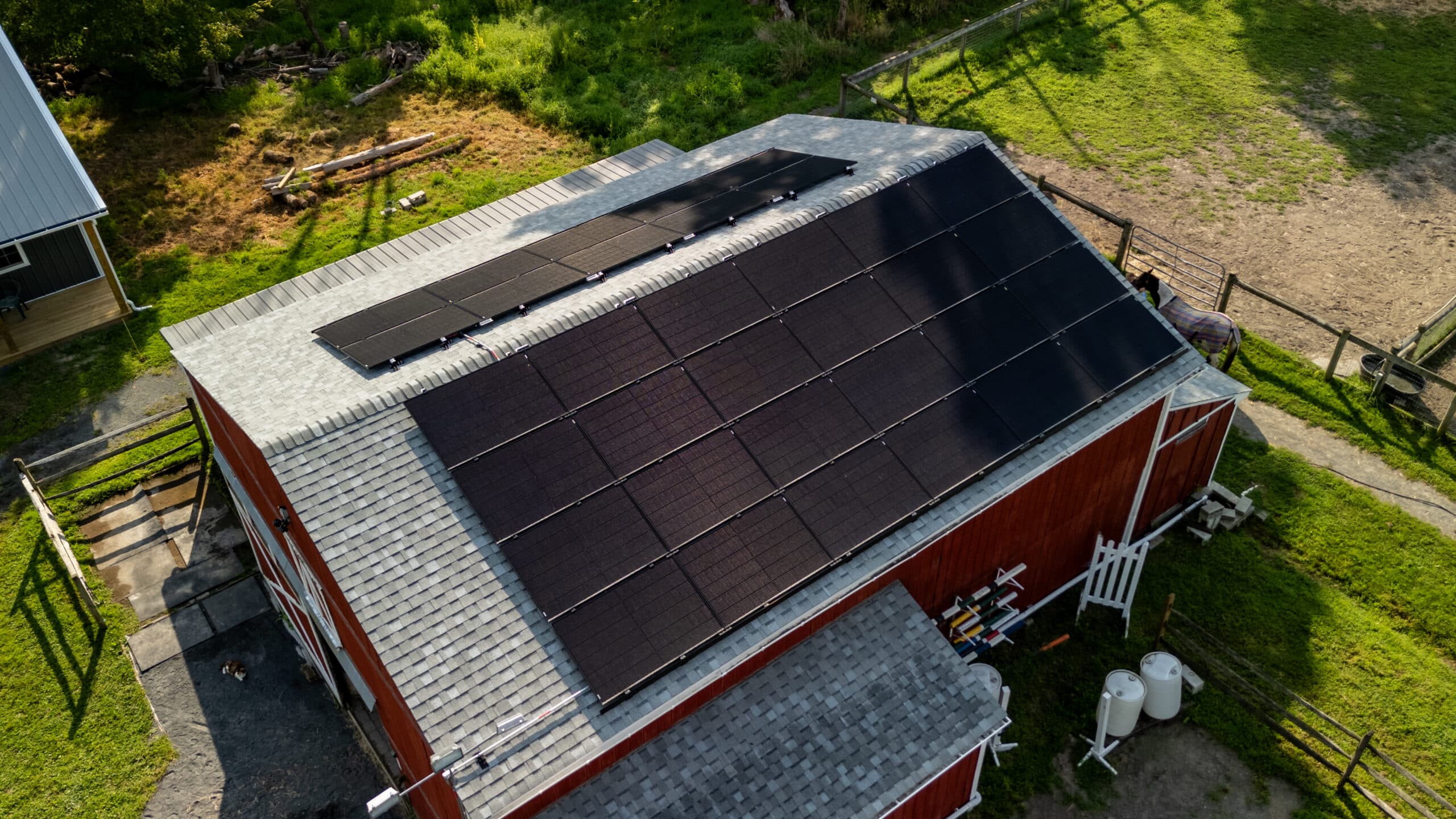
It can feel like there’s no way out of this cycle, but solar offers another path. When you install a solar energy system for your home, you take back control over what you pay for power. Instead of facing unpredictable rate increases, you essentially pre-pay for decades of electricity, giving your household long-term stability and protection from rising costs.
If you’re in our service area, we’d be glad to show you how solar works and what a system could look like for your home. We offer free, no-pressure estimates so you can explore your options comfortably.
Schedule your free estimate today!
Why Do Energy Prices Keep Rising?
Many home and business owners don’t realize that they are billed for electricity in several ways. Utilities use many different terms, but almost every bill includes two main charges: supply and delivery.
Supply
Supply is the electricity you actually use, measured in kilowatt-hours (kWh). It’s simply the price per kWh multiplied by the amount of energy you consumed.
Capacity costs, which PJM manages for our region, are usually included in this. Capacity is the cost of ensuring that the grid has enough power available at all times, even during extreme weather or very high demand. PJM, our regional grid operator, runs auctions to ensure there is enough generating capacity “on standby” for the future. Utilities are then required to buy that capacity, and those costs are passed through to customers as part of the supply rate.
Because of PJM’s recent auction results, utility companies in New Jersey and Pennsylvania raised supply rates in 2025 and will raise them again in 2026.
Delivery
Delivery is the cost of getting that electricity to your home. It includes the long-distance transmission lines, the local poles and wires in your neighborhood, and all the work needed to maintain and operate them safely.
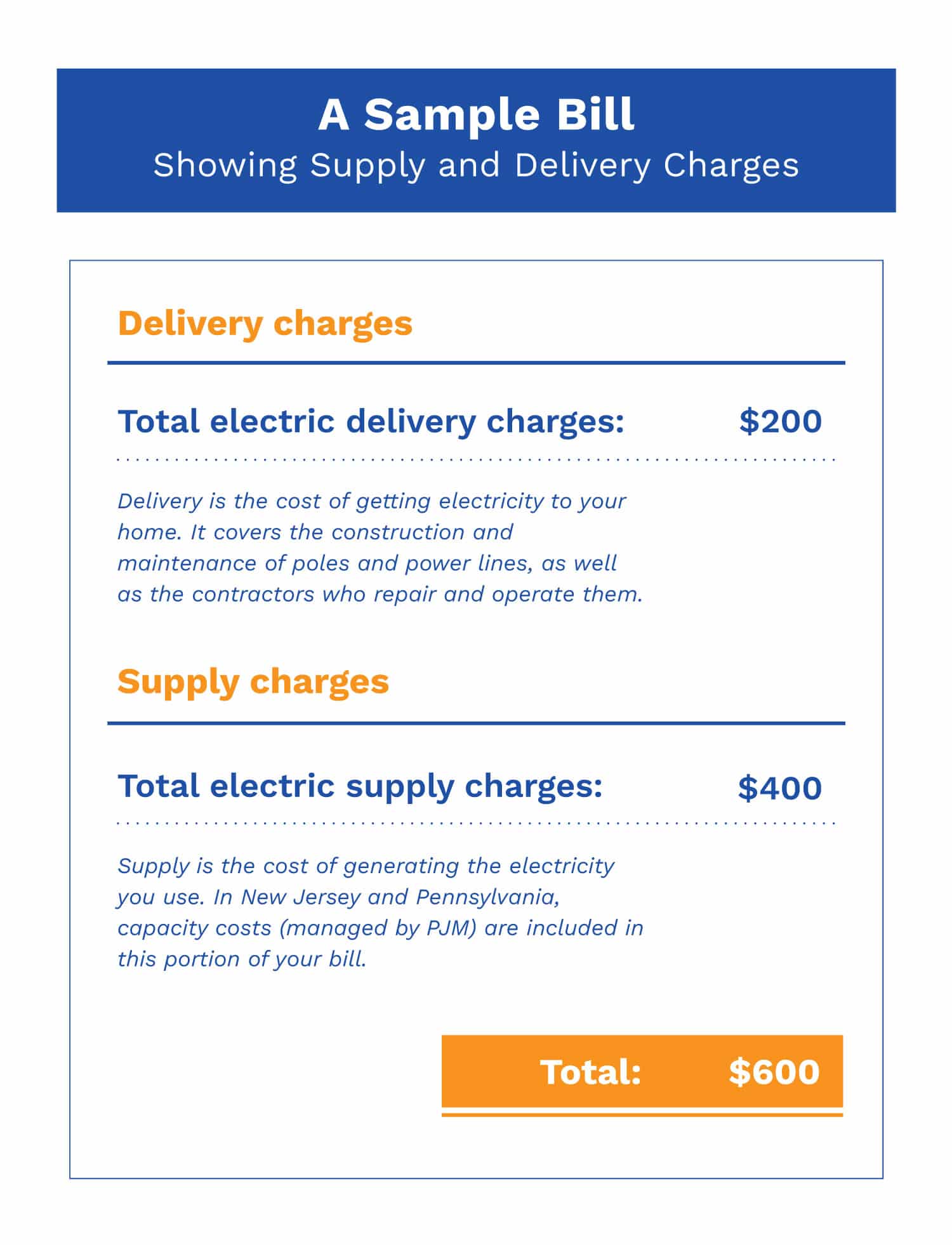
It’s important to understand that even if you use less power, you have no control over your delivery costs. Supply costs fluctuate based on how many kilowatt-hours you use, but delivery charges include both per-kWh fees and fixed fees that appear on your bill no matter what.
Our grid is aging, and billions of dollars of infrastructure and repairs are needed. Delivery charges (also called “distribution” or “transmission” charges) have increased significantly and will only continue to rise.
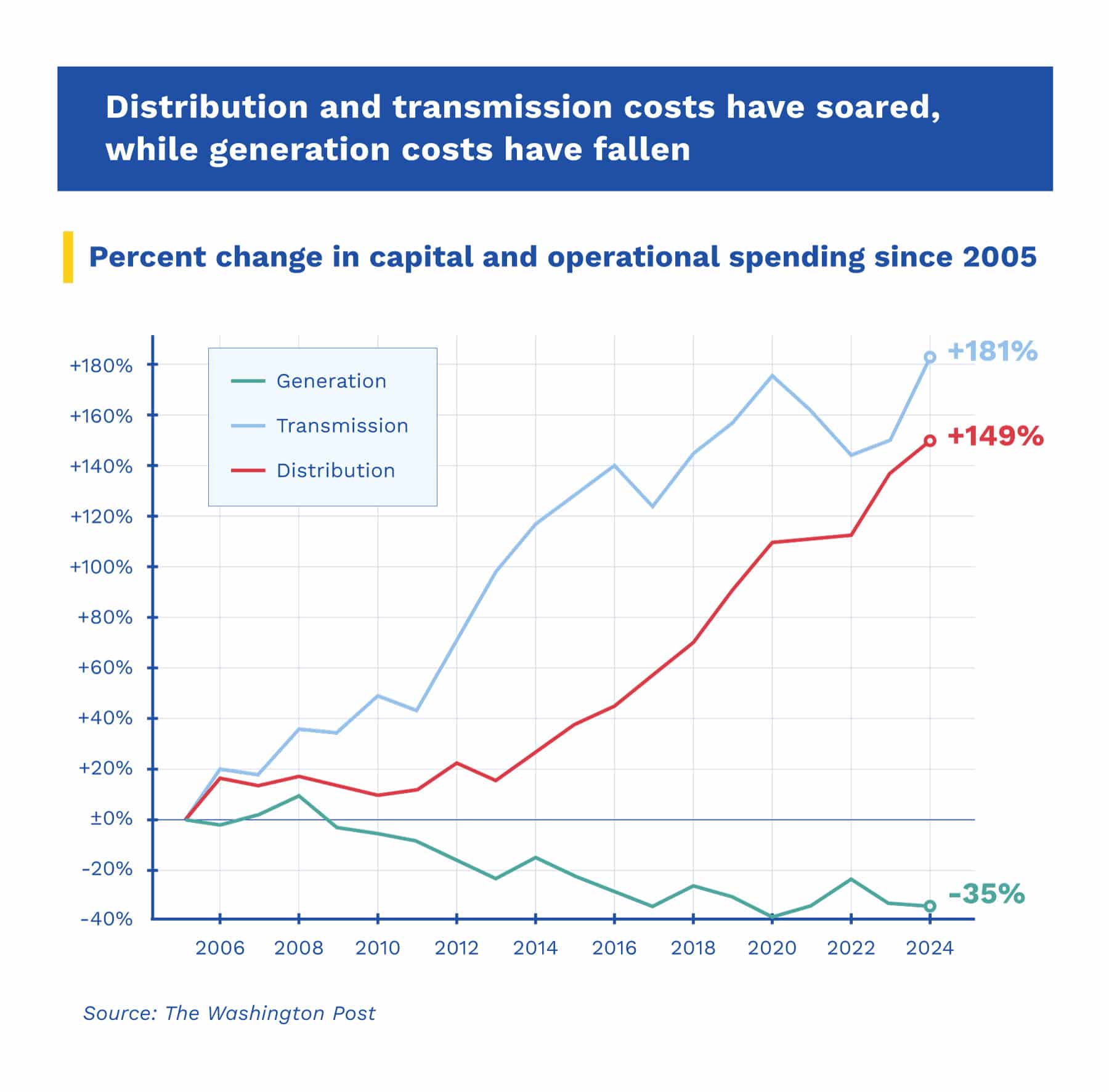
Going solar reduces or eliminates both parts of your electric bill. You no longer need to buy supply from the utility, because your electricity is generated right on your roof. And when your home is powered by your own solar energy, you avoid most delivery costs, since the electricity is traveling through your home’s wiring instead of the utility’s poles and lines.
Who is PJM Interconnection?
PJM Interconnection operates the electric grid for parts of 13 states and Washington, D.C. Think of them as air-traffic controllers for electricity.
Every minute, PJM balances how much power people need with how much power plants are producing. If demand increases, they tell power plants to increase their production. If demand drops, they scale back the generation. They also monitor storms, heat waves, and other events to move electricity where it’s needed most.
PJM also manages the organized buying and selling of electricity and backup power. This helps keep prices stable and ensures that there is enough energy available during extreme weather. They plan and approve new transmission lines and connect new resources, such as wind, solar, and battery storage, to keep the grid reliable for years to come.
What is PJM’s Capacity Auction, and Why Does it Raise Bills?
PJM handles “capacity,” which is the promise to have enough power available on the most extreme days across the region. Think of the hottest day in the summer, when everyone gets home around five o’clock and turns on their air conditioning at the same time. That sudden spike in demand is what capacity planning is designed to handle.
To ensure the grid can meet future demand, PJM holds a large auction every year. This auction plays a major role in determining what utilities ultimately charge you, whether you realize it or not.
PJM estimates how much electricity people will need several years in advance and then holds auctions to secure enough power plants and resources to be available when needed. Companies bid to provide “capacity,” meaning they get paid simply for being ready, not just for the electricity they produce. In return, they must show up and generate power during peak events. If they fail to deliver, they face fines; if they do, they earn the payment.
2024’s auction caused a massive spike: a 568% increase over the previous year, leading to a record $14.7 billion in costs that utilities are now passing to customers across Pennsylvania and New Jersey. That’s a large part of the reason many people saw 20%+ bill increases in 2025.
Despite new price caps meant to hold costs down, total auction costs still rose to $16.1 billion. Capacity prices jumped another 22% compared to last year.
Why? In short, demand is rising fast, and new supply isn’t coming online quickly enough.
- Electricity demand grew by over 5,000 megawatts this year, largely driven by data centers, electric vehicles, and extreme heat.
- PJM’s grid queue has been clogged since 2022, blocking many clean energy projects from connecting, which drives prices higher.
- Aging fossil fuel plants are retiring or proving unreliable, leaving fewer dependable sources of energy to meet growing demand.
Because utilities in PJM’s territory must buy capacity through these auctions, anyone who pays an electric bill in the region ends up absorbing these higher costs. Several governors have questioned whether their states should remain in PJM, but for now, there’s no clear path forward.
Utilities Raising Electric Rates in 2026
PECO’s Rate Increases
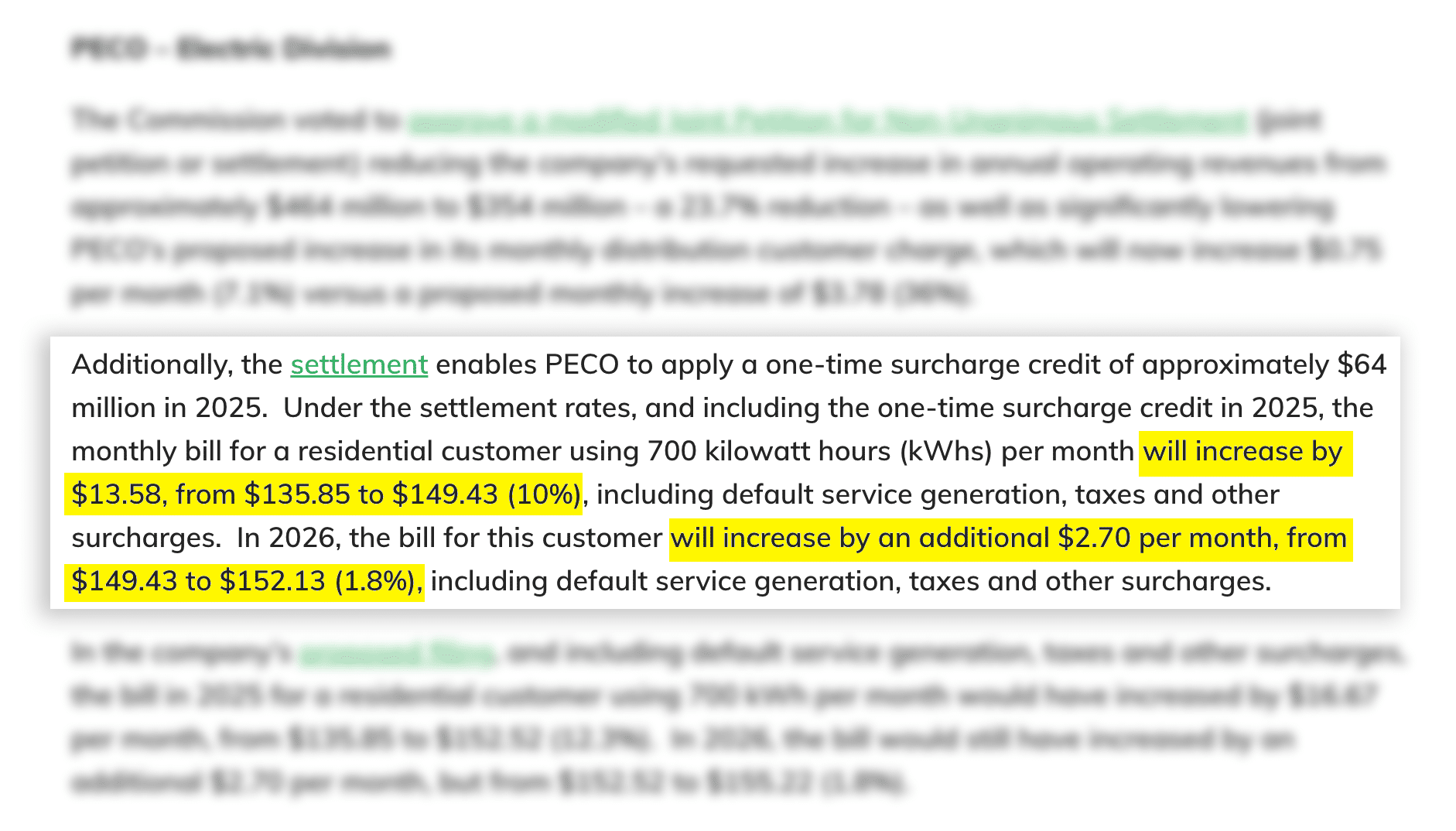
PECO, the utility company that generates and delivers electricity to most of Greater Philadelphia, was approved by the Pennsylvania Public Utility Commission for a $464 million rate increase, which went into effect in January 2025. This raised the average customer in their service area’s bill by 12.3% in 2025 and will raise it again by 1.7% per month in 2026.
PJM’s capacity auction charges are not included in this total, so the average PECO customer may likely see a total increase of 5-7% in 2026.
Delmarva Power’s Rate Increases
In 2025, winter bills spiked for Delmarva Power customers, leading to public hearings and an average $10/month increase in supply charge starting June 1, 2025 (for a typical home using 811 kWh/month).
Delmarva says this cost is a pass-through from wholesale markets, driven by a regional supply-demand imbalance and the July 2024 PJM capacity auction that came in 568% higher than the previous year (from $2.2B to $14.7B).
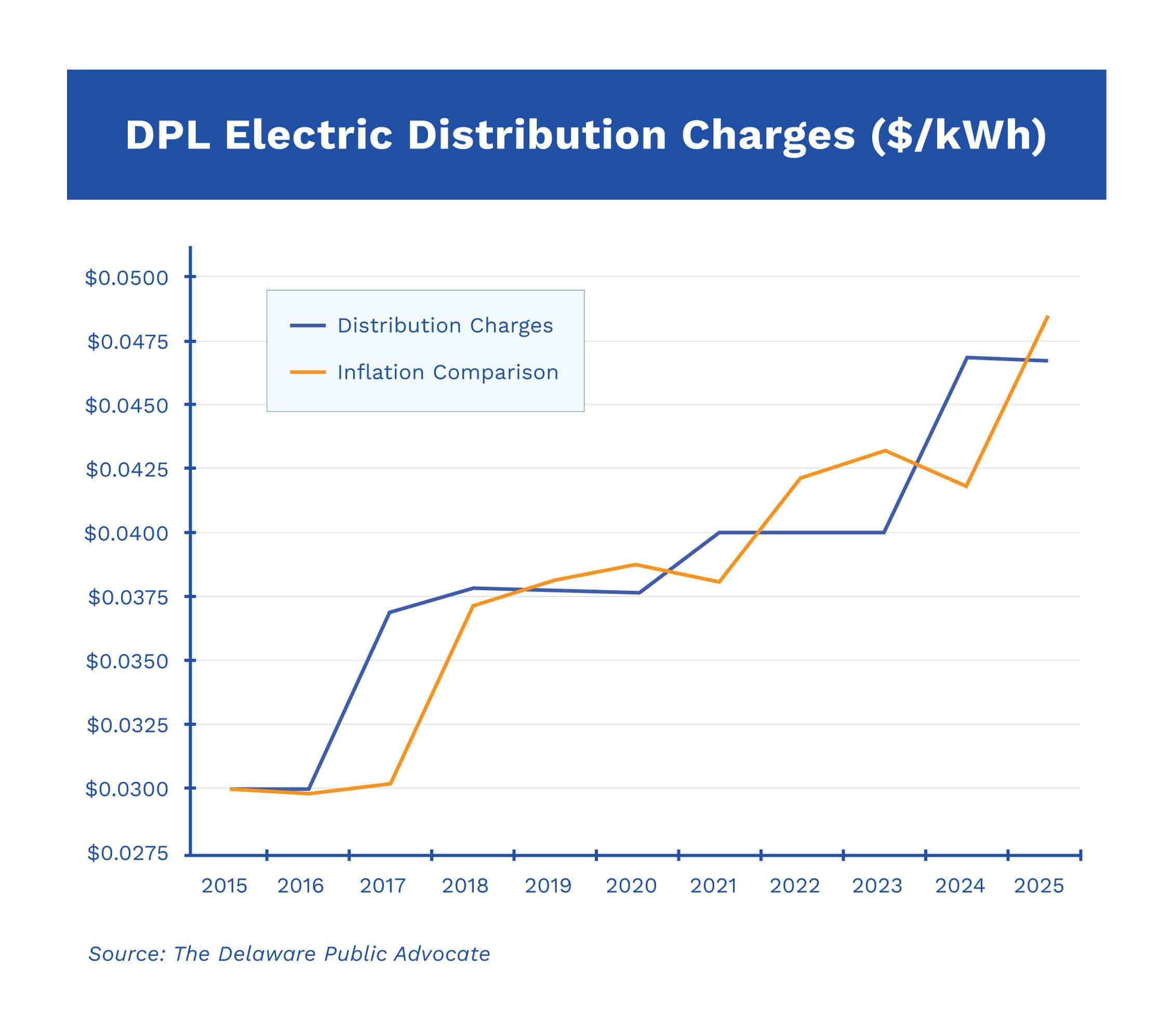
Delmarva doesn’t generate power; it buys from those markets and marks it up to sell to consumers. As a result, prices can be volatile. Delmarva delivery charges have risen at twice the rate of inflation since 2020.
Because PJM’s 2025 capacity auction came in even higher than 2024’s, those capacity costs will raise prices for Delmarva customers in 2026. Higher electric supply charges will continue into early 2026.
PSE&G’s Rate Increases
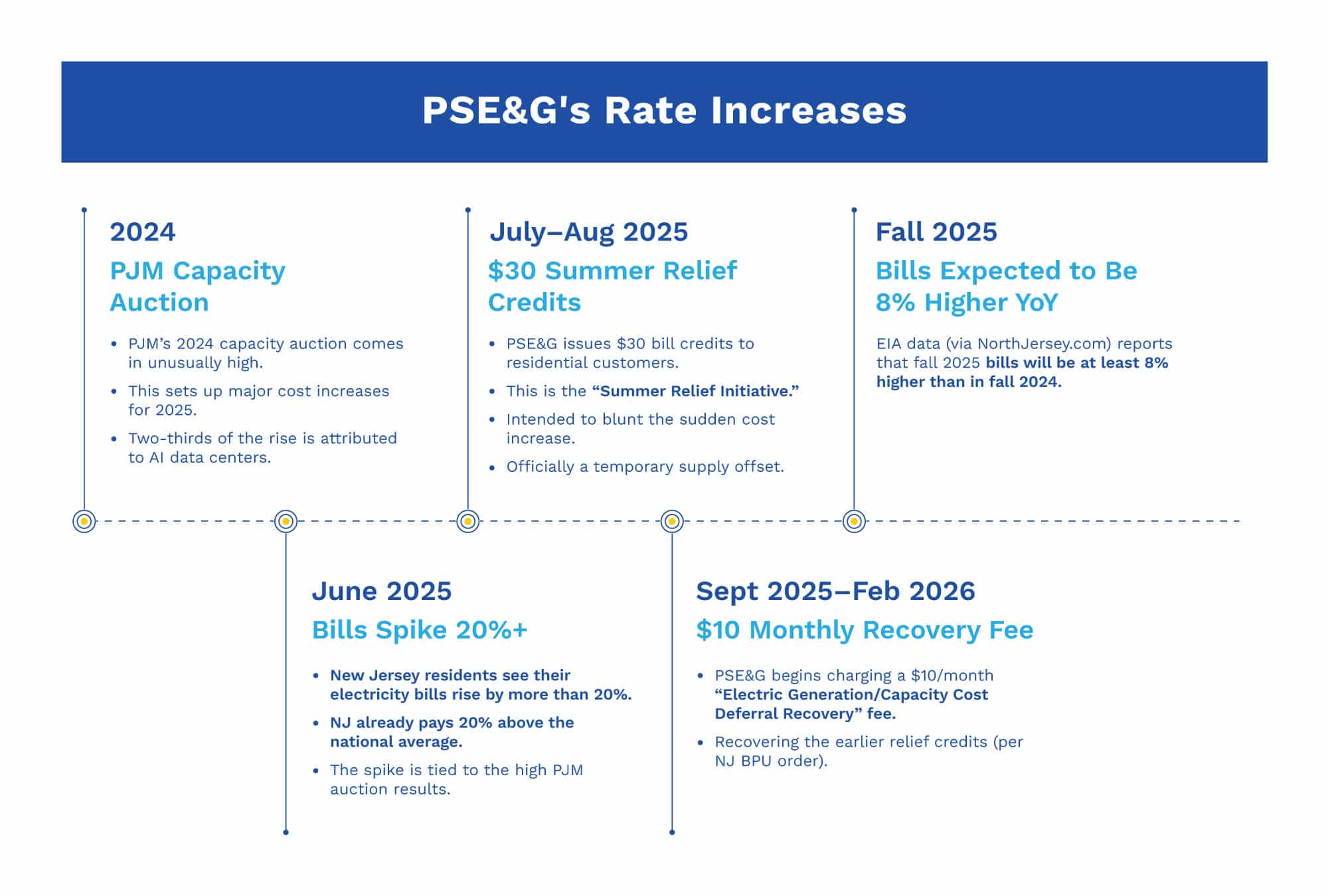
In June 2025, New Jersey residents saw their bills rise by more than 20%, in a state that already pays more than 20% above the national average for power. This was primarily due to PJM’s capacity auction coming in so high in 2024. PJM attributed two-thirds of the dramatic rise in costs to AI data centers.
PSE&G gave residential customers $30 bill credits in July and August as a “summer relief initiative” to blunt the shocking amount that PJM’s auction raised the supply portion of bills. This is what’s known as a “temporary supply offset.”
Per an NJ BPU order, they are now recovering that deferral with a $10/month “Electric Generation/Capacity Cost Deferral Recovery” charge from September 2025 through February 2026.
NorthJersey.com, citing EIA data, reported that fall 2025 bills will be at least 8% higher than last year for PSE&G customers.
PPL Electric Utility’s Rate Increases
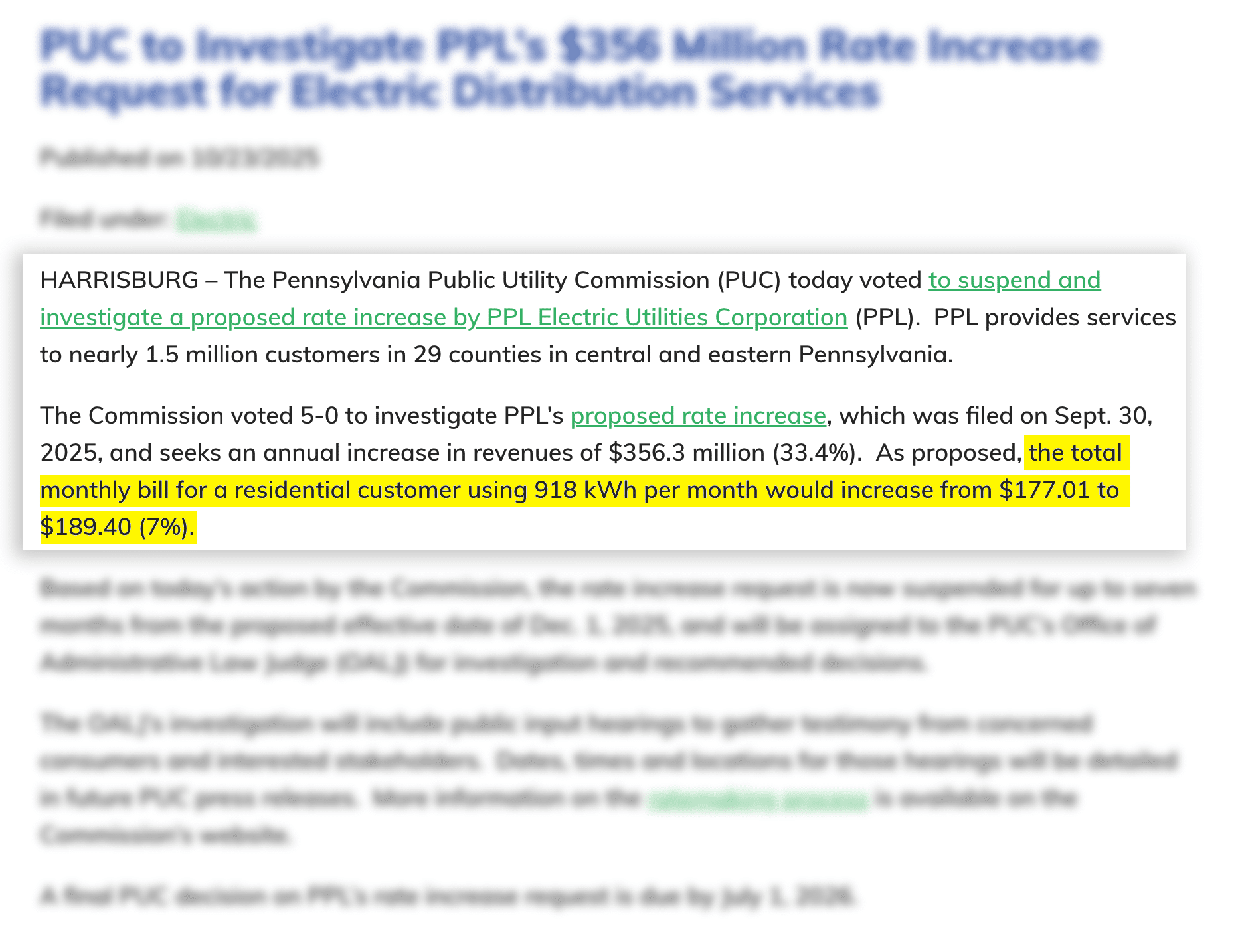
On September 30, 2025, PPL Electric filed an application with the Pennsylvania Public Utility Commission for a $356 million rate increase to improve its delivery and distribution infrastructure.
As of now, the PUC has suspended this application for up to seven months from the proposed date of December 1, 2025. If approved, this increase will raise the average bill of anyone in PPL territory by at least 7%.
Jersey Central Power & Light’s Rate Increases
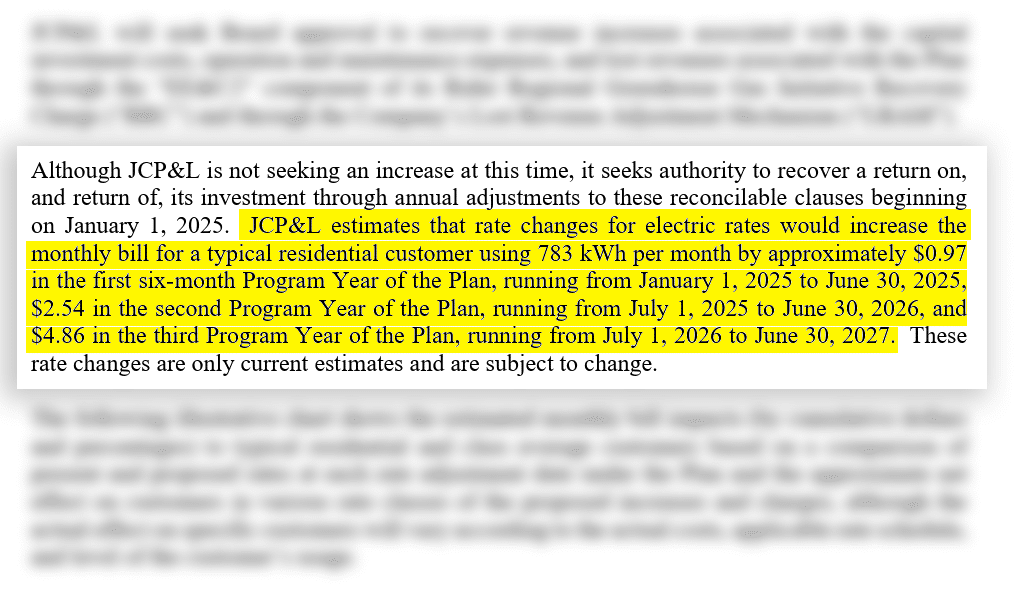
In June of 2024, the New Jersey Board of Public Utilities (BPU) approved JCP&L’s plan to raise prices in its service area by $923.3 million to fund infrastructure improvements.
These improvements will raise customers’ bills in their service area by $4.86/month starting in June of 2026.
Just like every other utility company listed here, these increases do not include the 1.5%-5% increase that will hit electric customers in 2026 because of PJM’s auction.
Atlantic City Electric’s Rate Increases
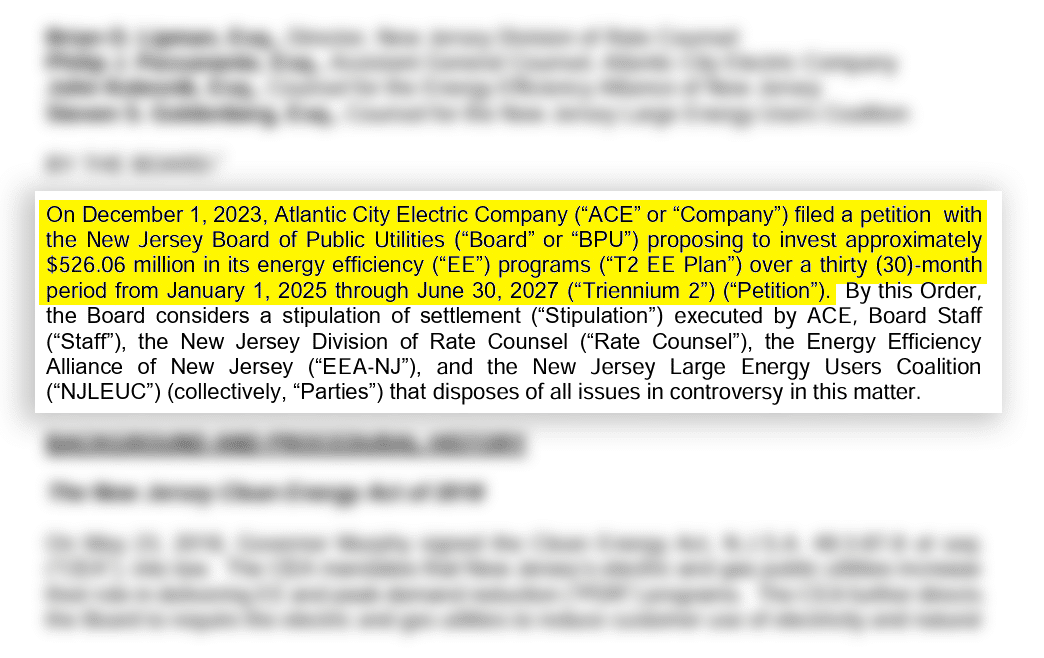
In November 2024, Atlantic City Electric filed a request for an 8% increase through the New Jersey Board of Public Utilities. That request is still pending, more than a year later.
However, many customers in their service area report that their bills have increased by more than 25% since 2022. If the BPU approves the 8% rate, it will take effect in 2026 or 2027.
Lower Your Electric Bills with Solar
No matter which utility you buy electricity from, price increases are coming, and electricity rates are not going back down.
Imagine feeling comfortable adjusting your heat or AC without worrying about what it will cost. With solar, rising utility rates have far less impact on your household budget.
If you begin the process today, you could have a solar energy system installed and producing electricity before next summer’s increases take effect.
We’d love to give you a personalized look at how solar could work for your home. Schedule a free consultation to see how much you could save before the next round of rate hikes.