
Home battery backup has come a long way in a short period of time. Systems are becoming more powerful, easier to install, and more practical for everyday homeowners.
At Exact Solar, we’ve installed a wide range of battery systems over the past 20 years. Every home is different, and the right setup depends on how much energy you use, what you want to back up, and how long you want that backup to last.
We’re now ready to install the Enphase IQ Battery 10C, which addresses many of the limitations we’ve seen with older battery systems.
In this article, we’ll walk through what makes the IQ Battery 10C different, how it works, and whether a battery backup system makes sense for your home.
Table of Contents
Enphase IQ Battery 10C Specs
There are quite a few technical specifications we could get into for the Enphase IQ Battery 10C, but for this article, we’ll stick with what’s easiest to understand when it comes to home battery backup. For most homeowners, two numbers matter when it comes to battery backup:
- Energy capacity: 10.08 kWh
- Continuous power output: 7.1 kW
We’ll break down what those actually mean and how they impact what your home can run during an outage.
How Home Battery Backup Works
Most people who want battery backup are looking for a backup power source. This is understandable, given the ever-increasing number of natural disasters.
For any homeowner interested in backing up their power supply, three questions must be answered in the planning process:
- What do I want to keep running?
- How long do I want backup power?
- What does it cost to get there?
The answers to each of those questions vary from home to home.
As battery technology has improved, it has become easier for homeowners to back up their entire homes; however, any project is still dependent on those three questions.
That being said, the Enphase IQ Battery 10C adds some compelling new features that make it easier to install and give homeowners peace of mind.
Enphase IQ Battery 10C Capacity and Power Explained
Each Enphase IQ Battery 10C can store about 10 kWh (kilowatt-hours) of energy. However, to truly understand how a home battery backup system works, you need to understand two things:
- Energy capacity
- Power rating
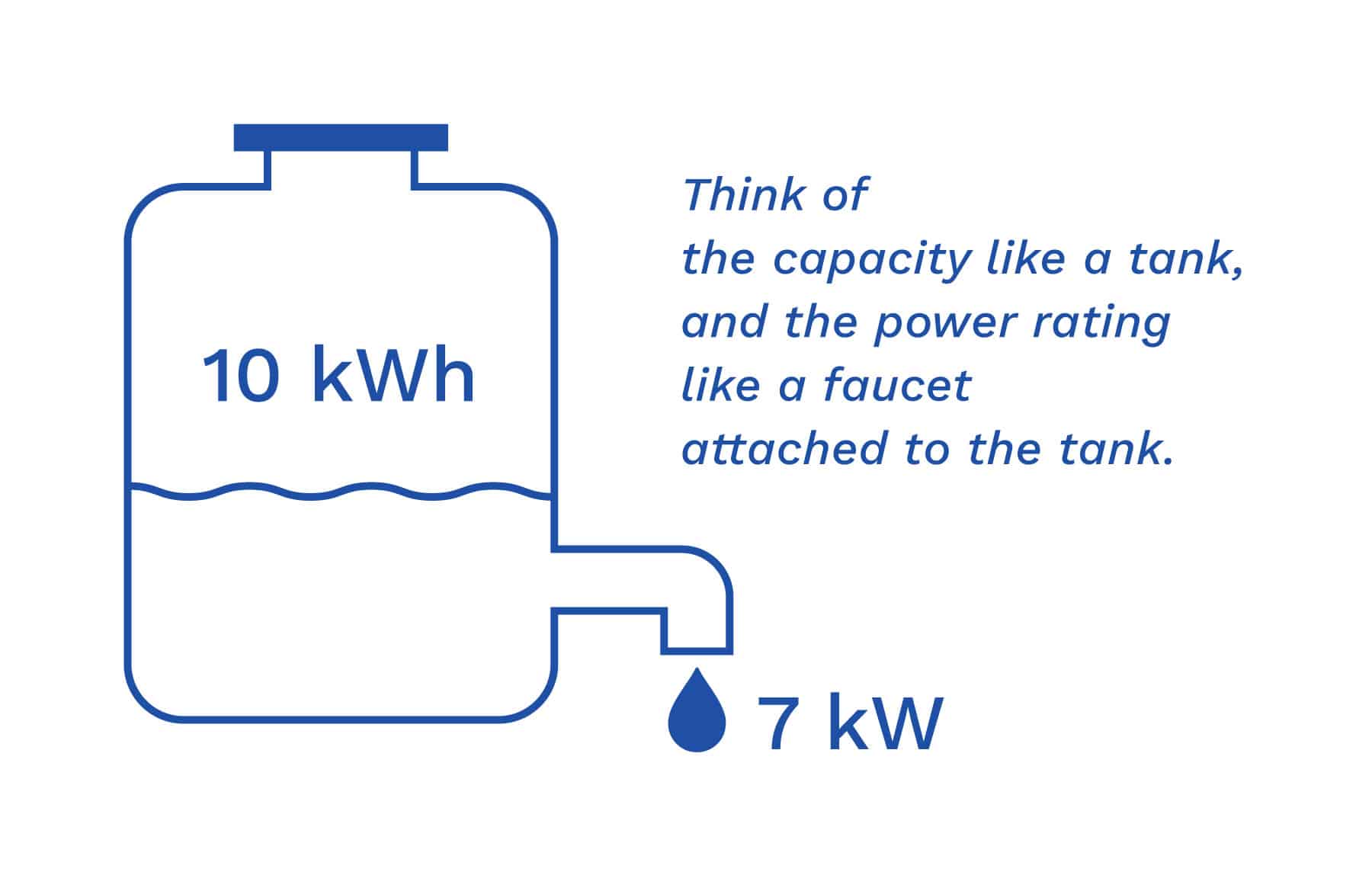
A helpful way to think about this is to picture the battery like a water tank. Think of the Enphase IQ Battery 10C like a water tank for electricity. The amount of water the tank can hold is the battery’s energy capacity.
Capacity is measured in kilowatt-hours (kWh). It’s a measure of the amount of energy a load (anything that uses power, like an appliance) uses over a period of time.
For example, the Enphase IQ 10C battery’s 10 kWh capacity could power 10 100-watt light bulbs for 10 hours. Storage alone doesn’t tell you how the system will perform in your home.
Every battery also has a power rating, which is the amount of energy that it can supply at any given moment.
If the battery’s capacity is a water tank that stores electricity, we can think of the power rating as a spout attached to the tank that pours electricity. If you have a huge jug with a tiny spout, it still takes a long time to pour water, even though there is a lot of water available. The same is true of batteries.
The Enphase IQ Battery 10C can “pour out” just over 7 kW (kilowatts) of power at any given time.
This becomes especially important for equipment such as air conditioners and well pumps, which require a power surge to start.
The IQ Battery 10C has a big spout and a big tank. It holds lots of energy and delivers it quickly when needed. But there are limitations to how much power it can deliver at once, so it’s important to prioritize your most important appliances.
When your installer designs your battery system, they’ll account for the inrush current your most important appliances require.
IQ 10C Offers More Energy in Less Space
The IQ Battery 10C is smaller and denser than older batteries. Remember the days when cell phones kept getting smaller and smaller, rather than having bigger screens each year? Enphase is following that playbook.
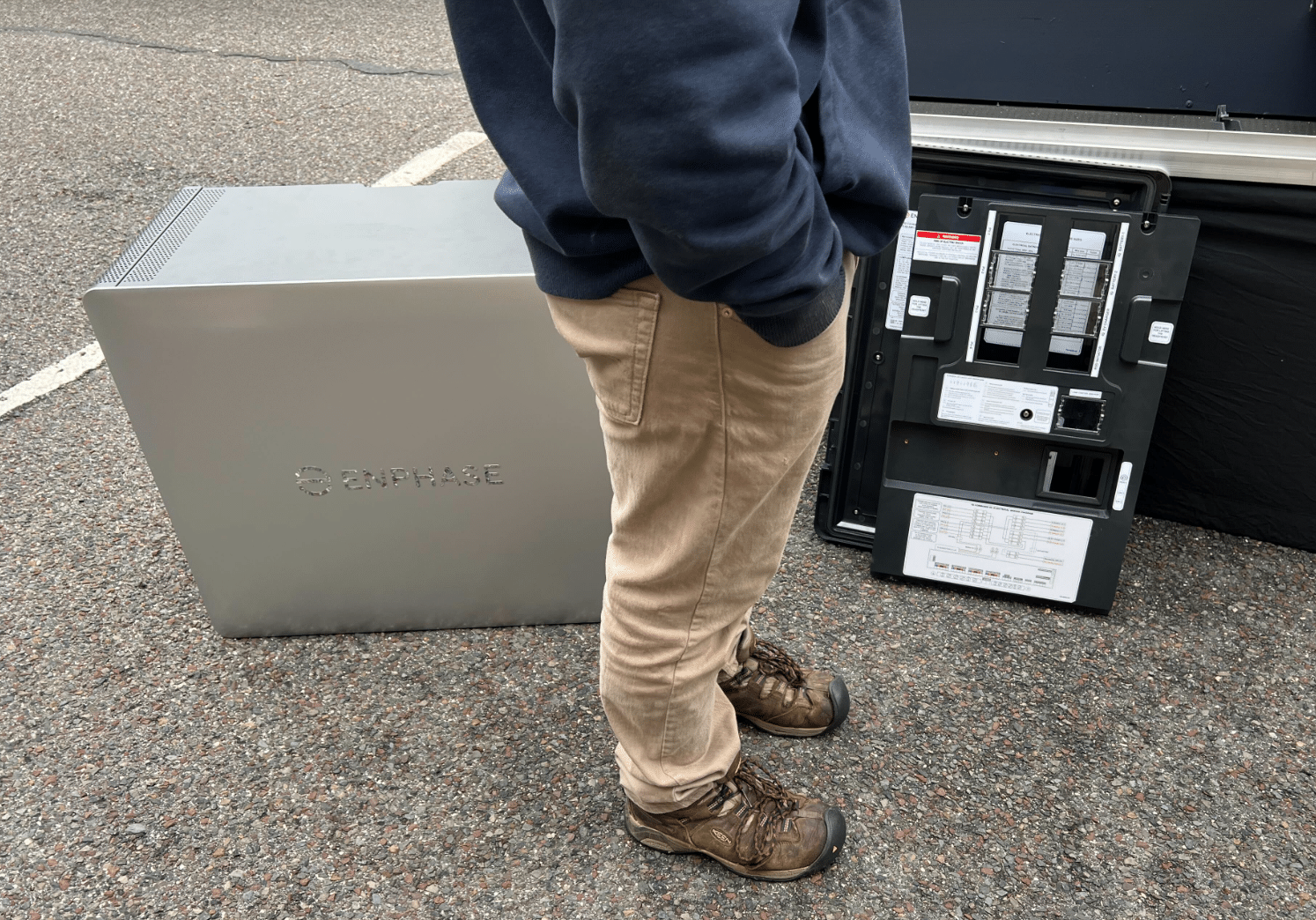
Enphase designed this fourth-generation battery with 26% higher energy density. It uses 62% less wall space compared to the previous model (the Enphase IQ Battery 5P).
For homeowners, this is great news. Previously, you would have needed two 5 kWh batteries to get 10 kWh. Now, in a single charge, the IQ 10C delivers 10 kWh.
This battery can be wall-mounted in a garage or outside, and because it’s compact, it leaves more room for other things. More power, more wall space.
IQ 10C is Safer by Design
Many customers for whom we install batteries are concerned about their safety. This is understandable, as they are being mounted in their homes, and homeowners deserve to know they’re safe.
That’s why Enphase made the IQ Battery 10C with Lithium Iron Phosphate (LFP).
LFP batteries are known for being stable and non-flammable. They’re much less likely to overheat or catch fire compared to some other lithium batteries, and they contain no cobalt (a metal that can increase fire risk in other battery types).
The IQ Battery 10C is UL 9540A certified. This means it’s been tested and found to be safe by Underwriters Laboratories. It comes with a 15-year limited warranty (for up to 6,000 cycles) from Enphase.
It’s simpler to install and requires less equipment, so there’s less potential points of failure.
Compatible with Enphase IQ8 Microinverters
The Enphase IQ Battery 10C is made to pair with Enphase’s microinverters (the small devices installed on each solar panel that convert the panel’s power to usable AC electricity).
They work together in what Enphase calls a “closed-loop energy ecosystem.” So, what does that mean for you?
If you already have a solar energy system with Enphase IQ8 microinverters, adding the IQ Battery 10C is easy. The Enphase monitoring app will show both your solar production and battery status in one place. In a power outage, this pairing really shines.
Typically, if you have only solar panels without a battery, they shut off during a blackout (to protect line workers repairing the grid). So you’re without power just like the rest of the neighborhood, even though you have a mini power plant on your roof!
With a modern battery backup system, you can “island” your home. When the power goes out, your battery and solar panels work together as a personal power plant for your house.
In that scenario, the battery needs to be able to power all the loads it’s responsible for back on. It needs to be built to handle the inrush current.
Understanding Inrush Current
Have you ever noticed the lights flicker for a split second when your air conditioner or refrigerator compressor kicks on? This happens because large appliances need a power surge to start up.
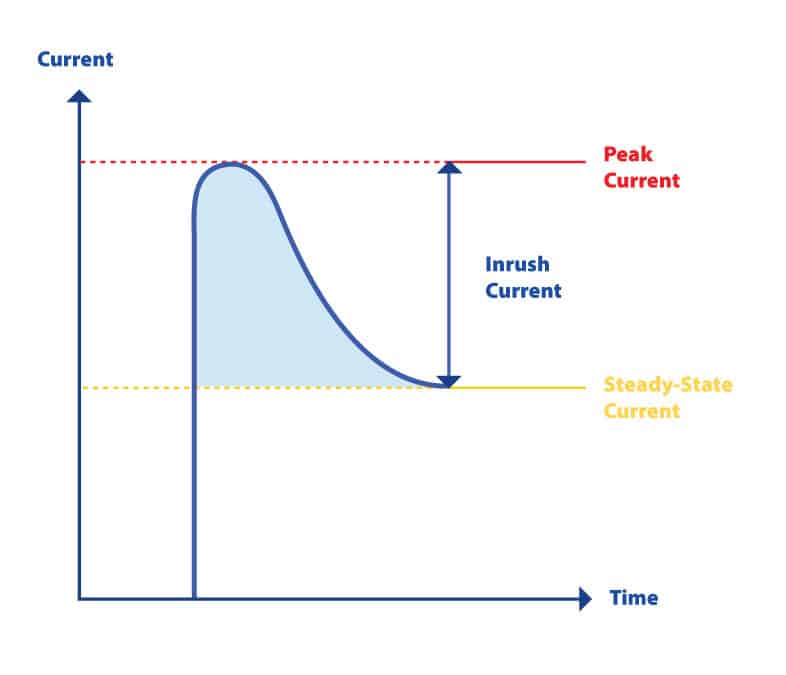
In electrical terms, this sudden burst is called inrush current. It’s like needing a strong initial push to open a sticky faucet.
For a brief moment, the appliance draws a lot more electricity than it does while running normally. If a battery isn’t strong enough to handle this surge, it could become overwhelmed and shut off, or “trip,” due to an overload while powering important loads in the home.
No matter how large the battery is, if it can’t handle the initial surge of power required to start the most important loads, it won’t be helpful in an emergency.
The Enphase IQ Battery 10C is built to handle these surges.
When your central AC, well pump, or sump pump starts, the battery can supply that quick jolt of power (up to about 90 amps of starting current) to get the motors running. After the initial 2 or 3 seconds, those appliances might use only 2-4 kW to keep running, which is well within the battery’s continuous 7 kW output limit.
Thanks to this design, the IQ Battery 10C can comfortably start and run devices like HVAC compressors, water pumps, and refrigerators without tripping off.
This means that if you’re using the battery during a power outage, you don’t have to worry that turning on the microwave or the AC will suddenly make everything go dark.
IQ 10C Doesn’t Require a Sub-panel
In older home battery setups combined with solar energy, you often needed a special “critical loads” sub-panel. That is a smaller electrical panel where you connect only the most important circuits to your battery (like your fridge, a few lights, etc.)
They also needed a transfer switch or a device to disconnect from the grid so their solar panels wouldn’t backfeed electricity into wires that workmen were fixing.
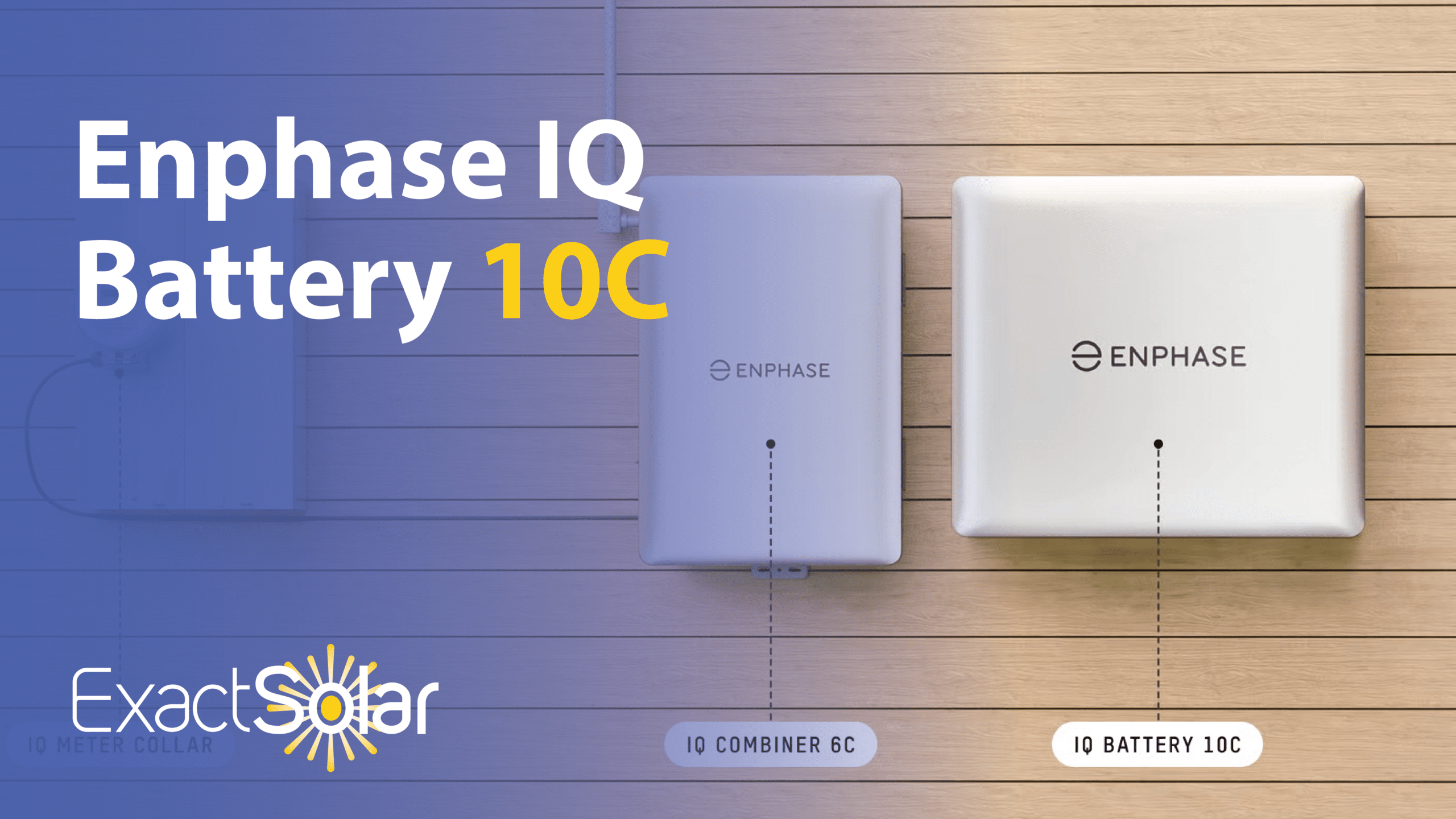
Enphase’s new technology eliminates the need for a critical loads panel in some situations. Their IQ Battery 10C system includes an IQ Meter Collar and an IQ Combiner 6C. The IQ Meter Collar attaches near your home’s utility meter and acts as a gatekeeper.
The moment the grid power goes down, this meter collar automatically isolates your home from the grid (so no electricity feeds back into the grid) and lets the battery take over.
Thanks to this gadget, you don’t need a separate transfer switch or a special critical loads panel. The battery can simply back up the entire main panel of your house without needing to add extra boxes on your wall.
It’s important to note that not all utilities allow meter collars. Depending on where you live, you may not be able to use this technology.
Meanwhile, the IQ Combiner 6C is an all-in-one electrical box that replaces multiple devices by combining breakers and controls for solar panels, batteries, and EV chargers into a single unit. Think of it as the “brain” that helps all parts of the system talk to each other.
Why Invest in Battery Backup Now?
There are several compelling reasons to act now if you want battery backup. Incentives have never been higher, and tariffs are likely to raise battery prices soon. Enphase’s cutting-edge new battery makes investing in battery backup even more compelling.
If you’re ready to go solar and back up your home with a battery system, now’s the time to act. There are several compelling reasons:
- Avoid Rising Tariffs: Imported batteries are getting more expensive due to tariffs and trade policies. The U.S. has placed high tariffs on batteries made in certain countries (for example, a steep tariff on Chinese-made lithium batteries). These tariffs (some as high as 145%) are already making many solar batteries more costly.
- Energy Security: Outages and extreme weather are becoming more common in many areas. Each year, we hear more news of storms, heat waves, or fires knocking out power. Having a battery increases your home’s resilience.
- Savings: More utilities are adopting time-of-use rates or demand charges. Having a battery lets you save on electric bills by using stored energy during expensive “peak” times (when the utility charges the most).
If you’d like to connect with us to learn more about how battery backup could benefit your home, reach out today to schedule a free consultation!
Frequently Asked Questions
What makes the Enphase IQ Battery 10C different from older home batteries?
The IQ Battery 10C delivers more power and energy in a smaller, cleaner-looking package. It’s designed to be easier to install, to take up less wall space, and to provide more usable power than many earlier battery systems.
How much energy can the IQ Battery 10C store?
Each IQ Battery 10C stores 10.08 kWh of energy. In practical terms, that can keep essential lights and appliances running for several hours during an outage, depending on what you choose to power.
What’s the difference between energy capacity and power rating?
A simple way to think about it is like a tank of water:
- Energy capacity is the tank’s size. It tells you how much energy the battery can store.
- Power rating is the size of the spout. It tells you how quickly that energy can be delivered at any given time.
Can the IQ Battery 10C run larger appliances, such as AC units, well pumps, or sump pumps?
Yes. The system is designed to handle the high “inrush current” these appliances need to start. It can deliver a strong burst of power, up to about 90 amps of starting current, and then continue running them within its 7 kW continuous output, as long as there is available charge. Capacity determines how long your backup lasts, while power determines what the battery can run at once.
Do I need to upgrade my electrical panel to add the IQ Battery 10C?
In many cases, no. One advantage of this system is that it often works with your existing electrical panel, especially when paired with the IQ Meter Collar and Combiner.
That said, not all utilities currently allow meter collars. We’ll confirm what’s allowed with your utility during your consultation and let you know if any upgrades are needed.
Can I add an IQ Battery 10C to my existing Enphase solar system?
If your system uses Enphase IQ8 microinverters, the IQ Battery 10C integrates seamlessly. Your solar production and battery storage will appear together in the Enphase app, making it easy to monitor everything in one place.
Is the Enphase IQ Battery 10C safe?
Yes. The battery uses Lithium Iron Phosphate (LFP) chemistry, known for its stability and strong safety profile compared to other lithium battery chemistries. It is UL 9540A tested and includes a 15-year limited warranty, covering up to 6,000 cycles, from Enphase Energy.
How much wall space does the IQ Battery 10C require?
The IQ Battery 10C is designed to be compact. It offers about 26% higher energy density than the previous generation while using roughly 62% less wall space for the same amount of energy. That means you can get more backup power without taking up as much room.
Why consider battery backup now instead of waiting?
Several factors are pushing more homeowners to act now. Tariffs are already increasing the cost of many imported batteries, and utility trends are shifting. Outages, extreme weather, and time-of-use or demand-based rates are becoming more common.
Adding a battery now can help protect you from rising costs and give you more control during outages.