

Over the past 20 years, our team has helped thousands of homeowners and business owners explore solar energy. We’ve found that most people pay their electric bill each month without knowing what they are truly paying for. In fact, most don’t know how to read their bill in the first place, and that’s okay. Utility bills are not designed to be easy to read. In this guide, you’ll learn precisely how you’re charged for electricity and what those numbers actually mean.
Table of Contents
What Is a Kilowatt-Hour?
Electricity is measured in kilowatt-hours (kWh). This is a unit of measurement that shows how much energy your home or business uses.
One kilowatt equals 1,000 watts. A watt measures how much electricity something uses at a given moment. A kilowatt-hour measures how much power is used over time.

For example, if you turn on a 100-watt light bulb for ten hours, you’ll use one kilowatt-hour of electricity. Drying laundry could use three to five kilowatt-hours in a single load, and an air conditioner could use several every day during the summer.
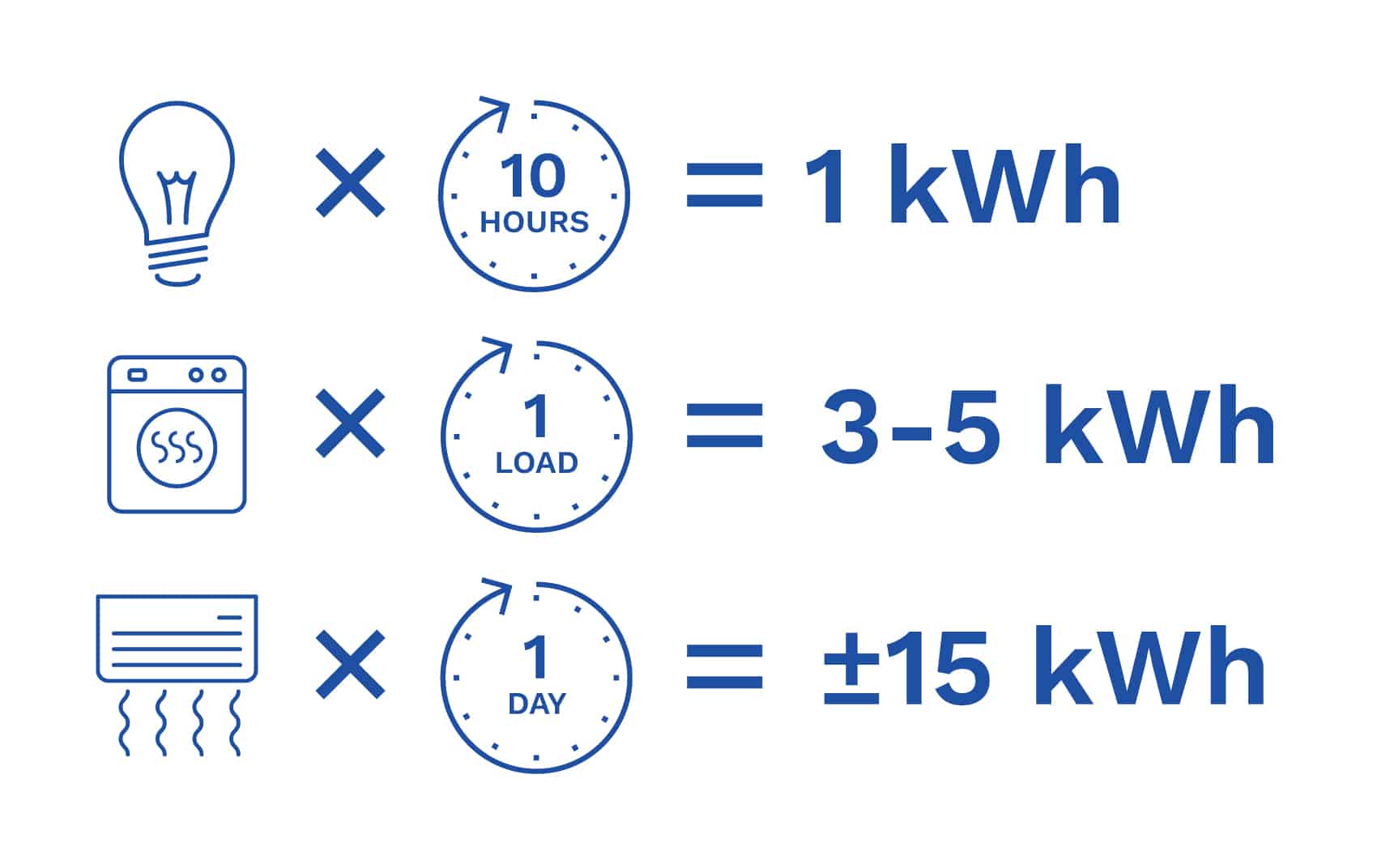
Your utility adds up all the kilowatt-hours you use during a billing period and multiplies that total by the rates they charge. That number, your usage multiplied by their rate, determines what you’re charged on your electric bill.
How Utilities Bill for Electricity
Every electric bill includes two main charges:
- Supply: what you pay for the electricity itself
- Delivery: what you pay to transport that electricity to your home or business

A simple way to picture this is to imagine ordering a pizza. The supply charge is the cost to make it, and the delivery charge is the cost to bring it to your door. Both are necessary to fulfill your order, and are itemized separately on your receipt. To find the total, you add them together.

On your electric bill, supply and delivery appear in different sections. Many customers see one rate and assume that’s their total cost per kilowatt-hour. In reality, you need to add both together to find your true price for electricity.
What This Looks Like on Your Bill
To help you better picture this in practice, let’s take a look at a sample PECO bill:
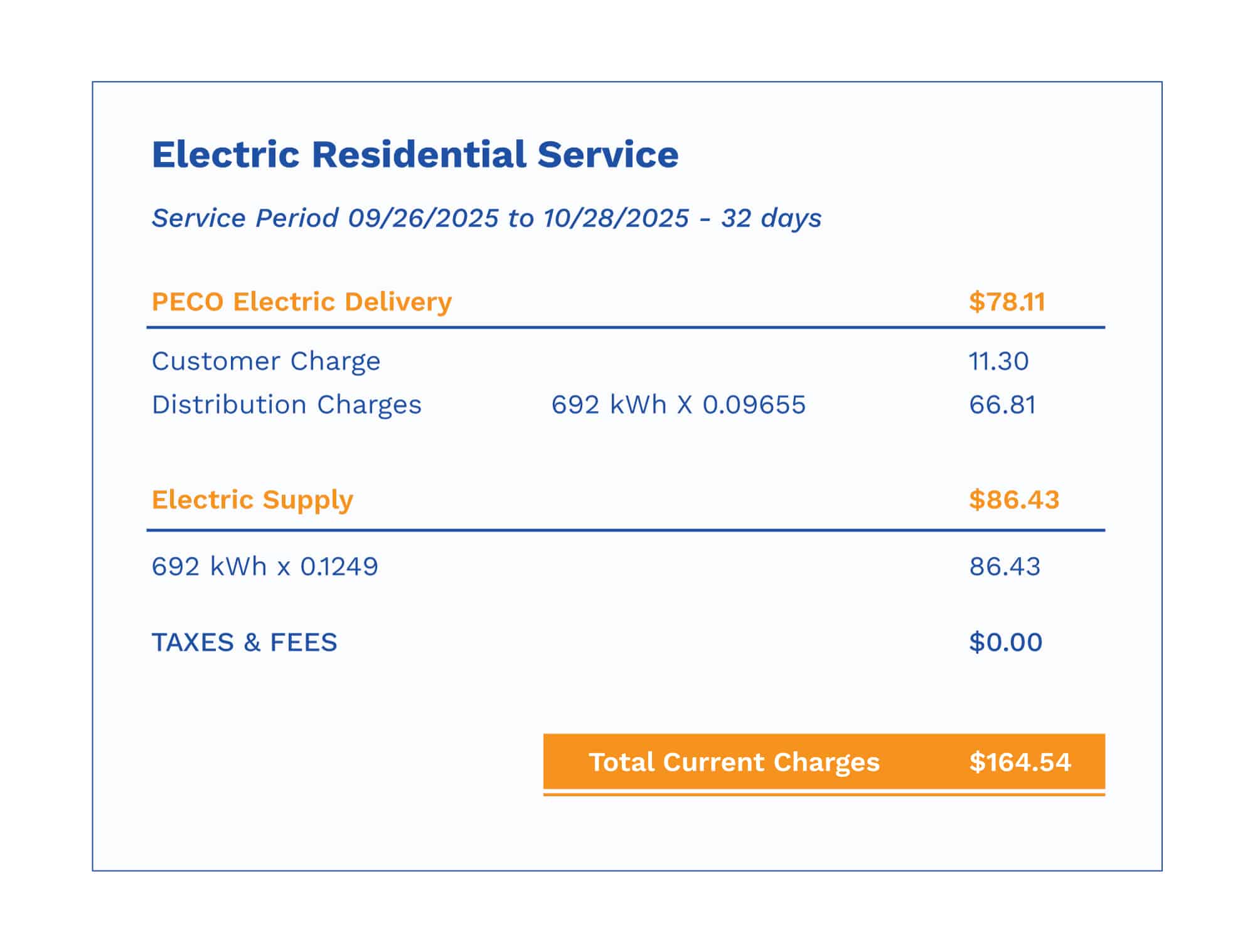
In the bill above, you will notice two separate charges. The first, delivery, is labeled as “PECO Electric Delivery”. This is the cost of delivering the energy you used during the billing period. In this example, we can see that the customer used 692 kWh of electricity, and their delivery rate is $0.09655.
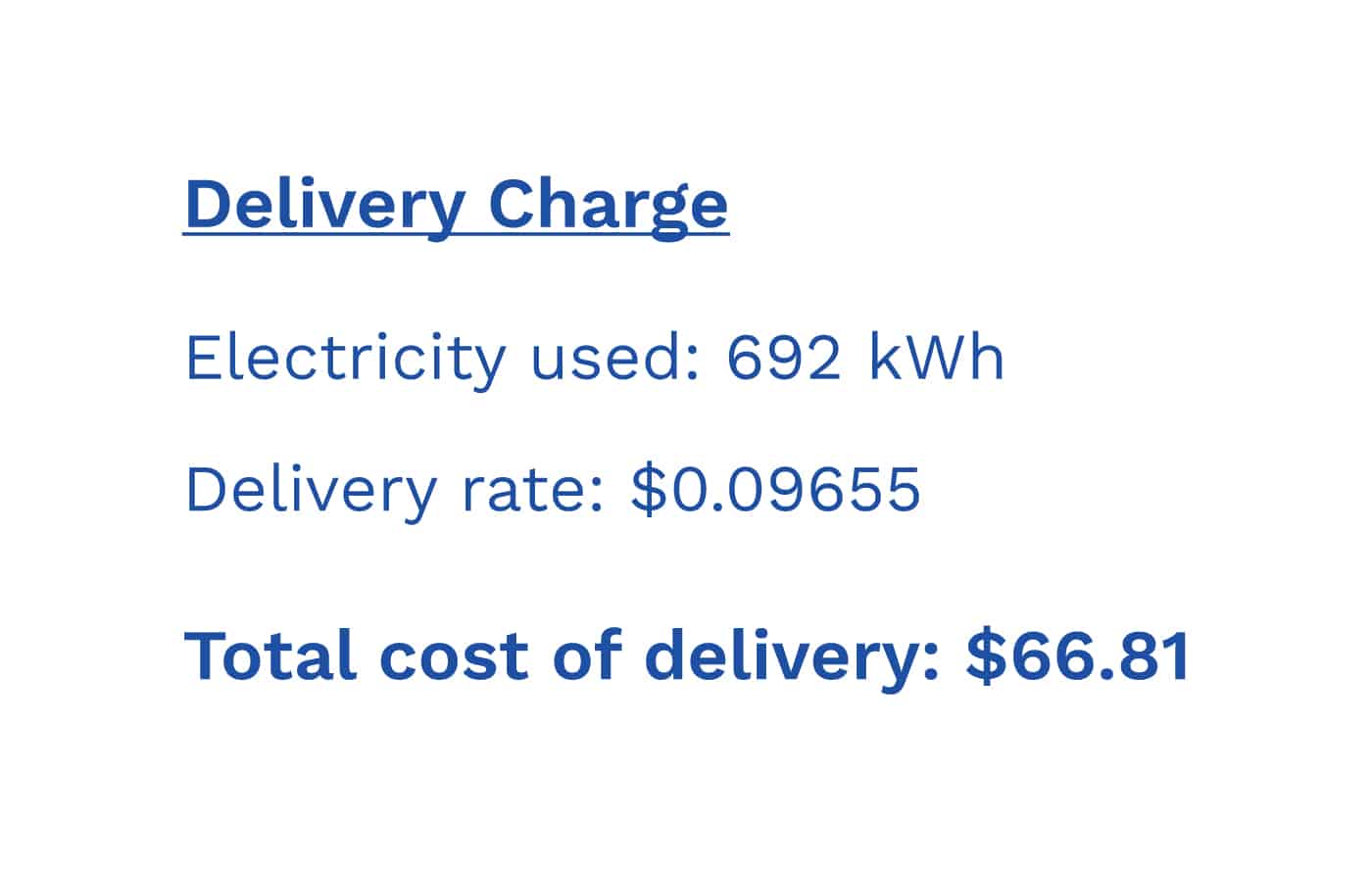
Many people see this number and assume that it is their rate for electricity. However, that is incorrect. As we mentioned before, you will need to add your delivery and supply rates together to find your actual electric rate.
The second charge you will see on this bill is “Electric Supply”. As previously explained, this is how much you are being charged for the electricity you used during the billing period. This customer used a total of 692 kWh of electricity, and their supply rate is $0.1249.
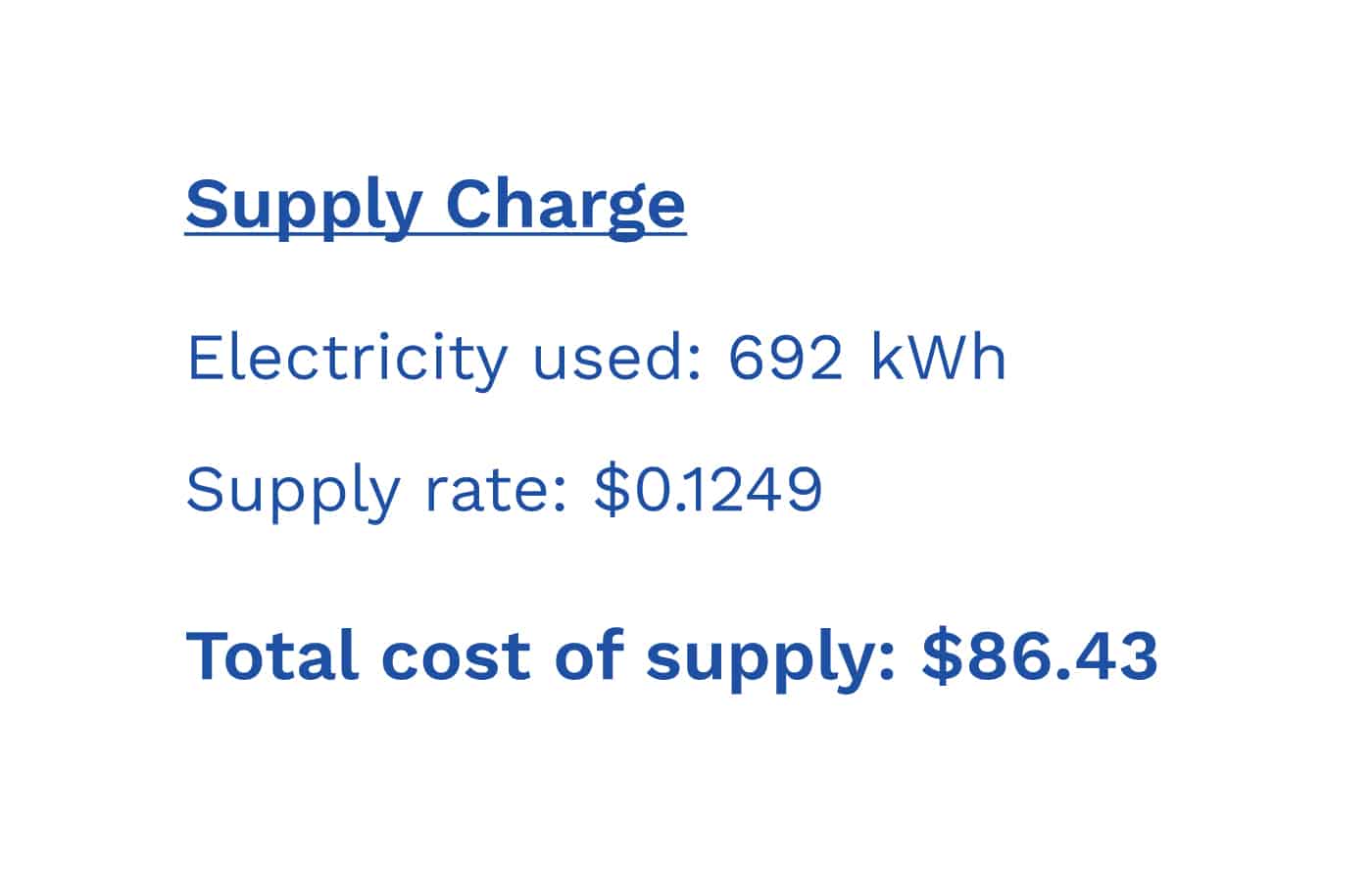
When you order a pizza, your total includes both the cost of the pizza and the delivery fee. Your electric bill works the same way, which is why you pay one total each month. In this bill, the customer paid a total of $164.54. This total includes the cost of delivery, supply, and a flat customer fee for using PECO’s service.
Now, to determine your actual electric rate, we have to add the delivery and supply rates together.
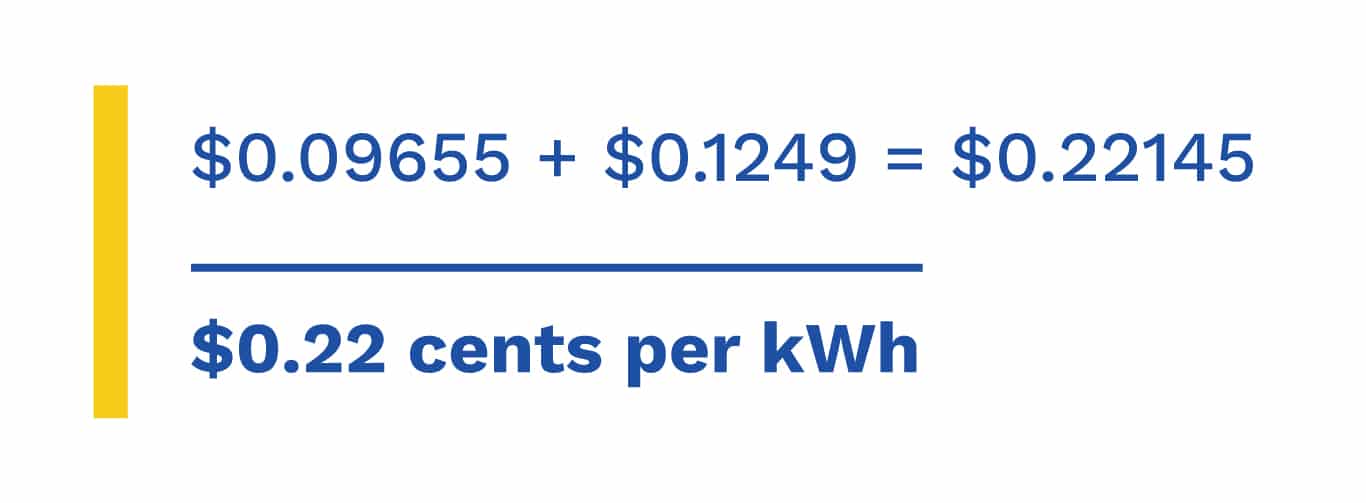
22¢ is the actual rate this customer is paying for electricity, not 9¢ or 12¢ as it may initially appear. Once both charges are combined, the real cost of power is often higher than most people realize!
How Solar Changes the Equation
When you go solar, your system produces electricity directly on-site. That single change impacts both parts of your bill:
- You no longer purchase supply from the utility.
- You avoid delivery charges because you are generating your own electricity.
- You gain long-term protection from rising rates by locking in a stable, predictable cost for every kilowatt-hour your system generates.
Instead of buying electricity from your utility at a rate that increases year after year, you’re producing power at a lower, consistent rate that never goes up. For both homes and businesses, that stability creates meaningful long-term savings.
See How Much You Can Save with Solar
Once you understand how your electric bill works, the value of solar becomes clear. Right now, you’re paying your utility for electricity that becomes more expensive over time. With solar, you can change that. By producing your own energy, you replace high and unpredictable utility rates with a steady, affordable cost that never goes up.
For more than 20 years, Exact Solar has helped homeowners and businesses gain energy independence and long-term savings.
Let’s review your electric bill and see how much you can save with solar!